Six typical goals
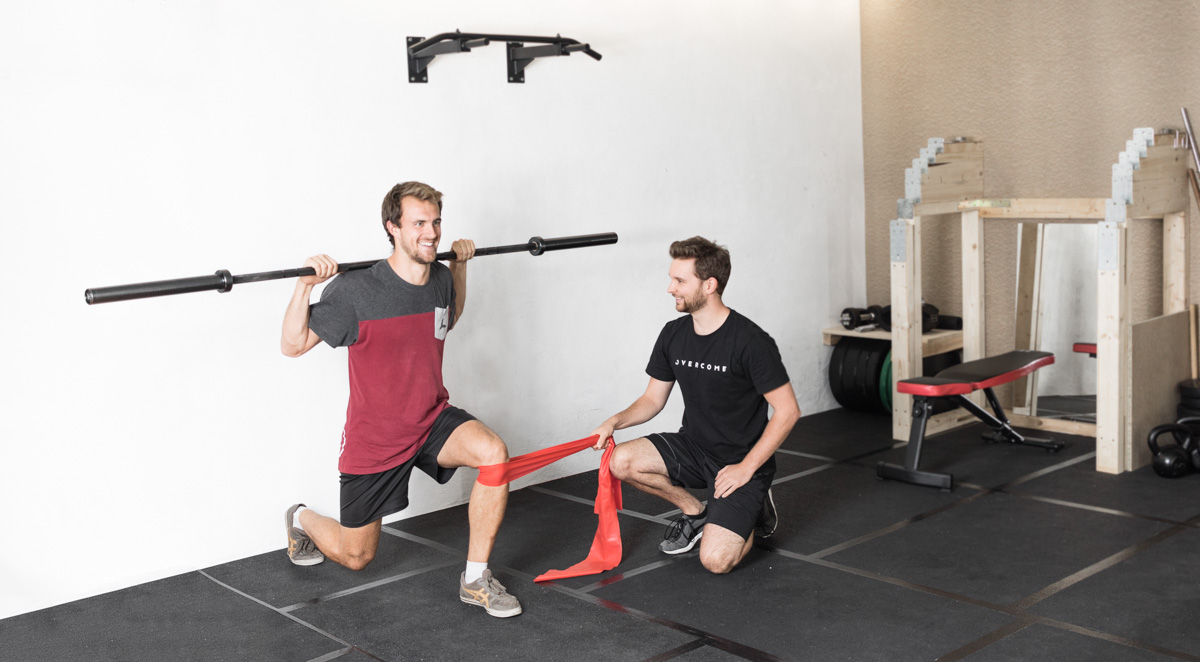
Strength training without the gym feeling
Half of all exercisers feel out of place in the weights room, more than half are confused by contradictory advice. With me you learn the five basic patterns — squat, hinge, push, pull, carry — with clean technique, body weight, kettlebell or barbell. And yes: muscle mass and strength are the most important factors for healthy life years.
A back that survives the office day
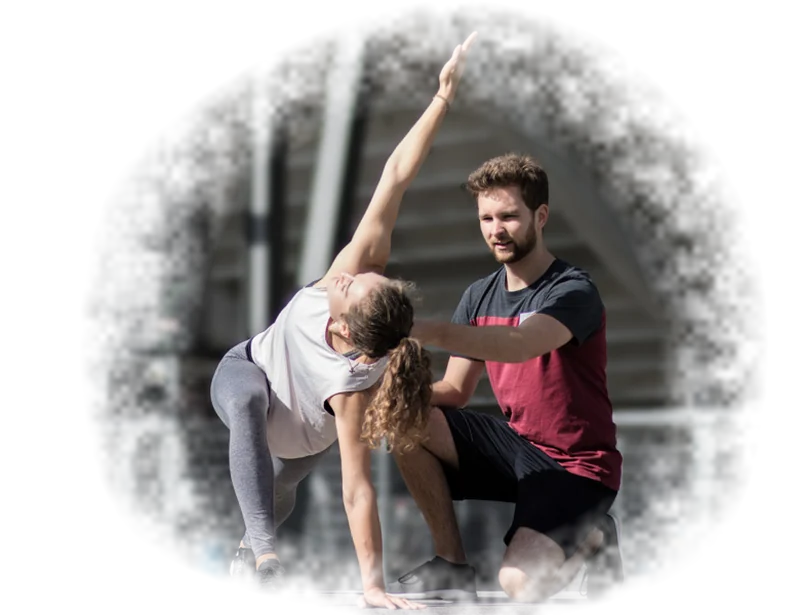
One in four in Austria has chronic back pain, from 60 almost four in ten. Pain is a protective decision of the nervous system — so I combine strength for trunk and hips with thoracic mobility, breathing and neurocentric drills that often show within minutes what helps your back. After medical assessment, no substitute for therapy.
Mobility we measure in degrees
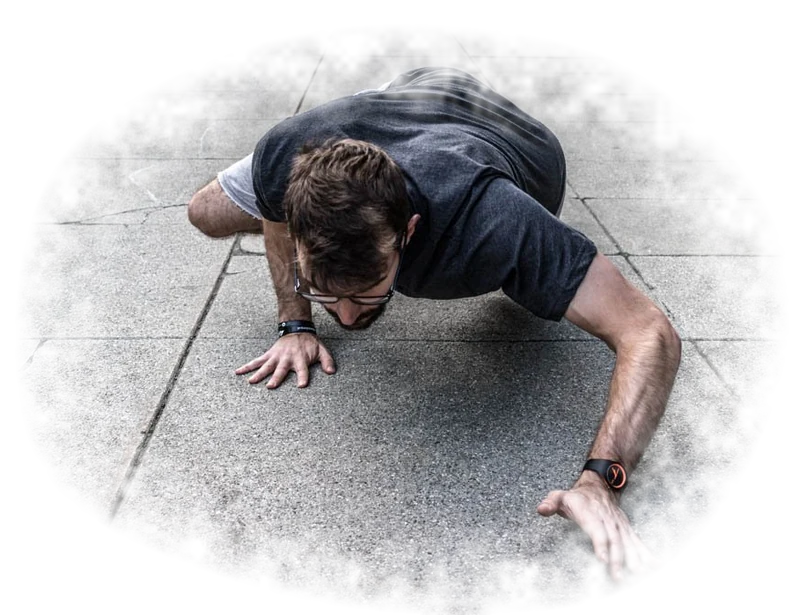
“I'm so stiff” isn't a goal. “Deep squat with heels down” or “shoulder 170° flexion” is. We measure with FMS/FCS and a goniometer, then train active mobility — strength in the end range, not just stretching — and re-measure.
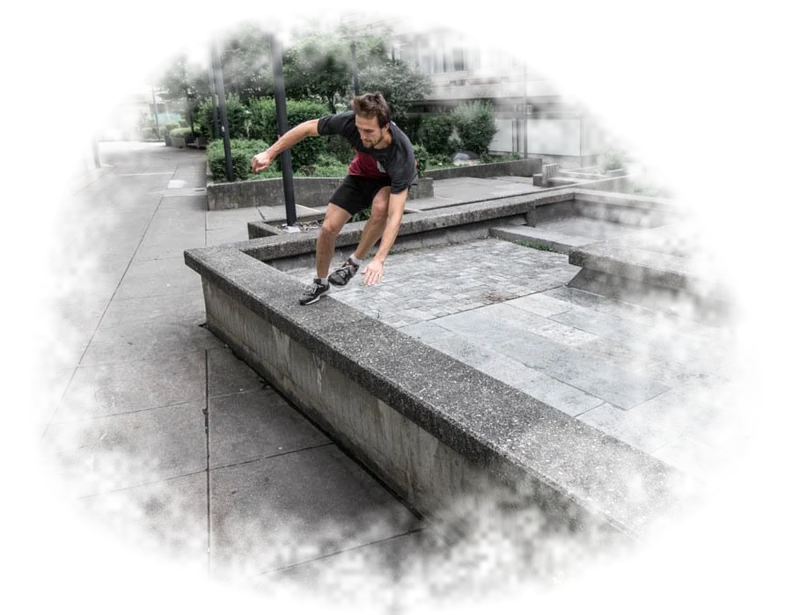
Follow-up training after physiotherapy
Knee, ankle, shoulder, back: therapy is finished, but between “pain-free” and “I fully trust the joint again” lie months of progressive training. That's exactly what I take over — happily in coordination with your physio. I know from my own experience what that's like: MCL tear, bone marrow oedema, jumper's knee.
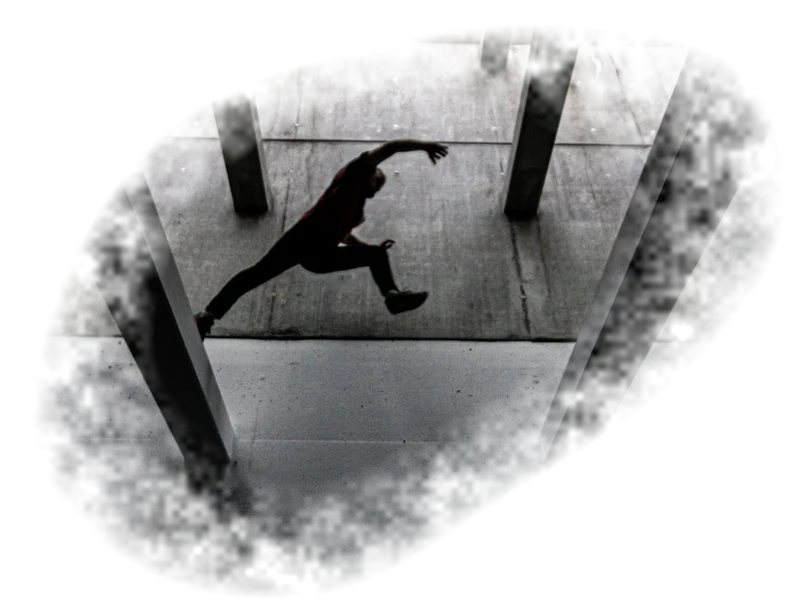
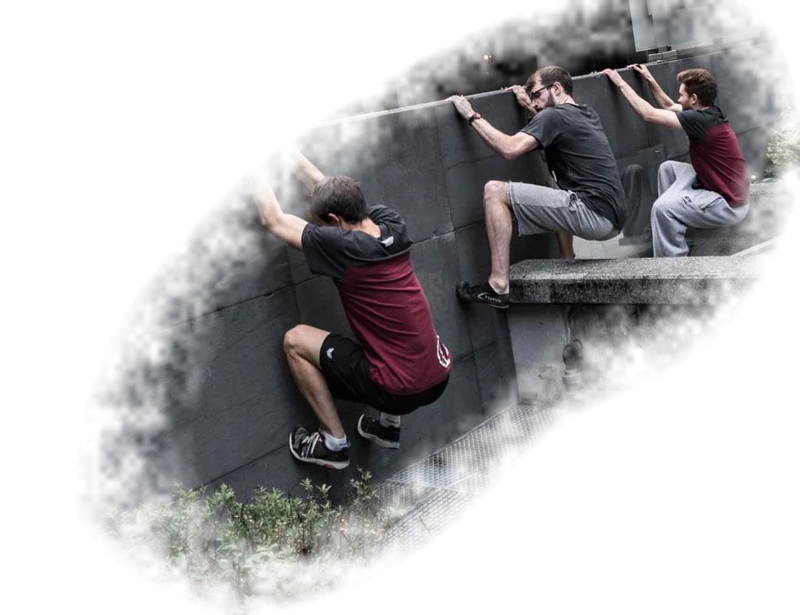
Athletics, reaction, falling technique
Sport-specific athletic training (AFK trainer), balance and reaction under fatigue, landing mechanics — and the ability to survive a fall uninjured: parkour falling technique and ukemi, 1:1 or as a workshop for teams and clubs.
Falling technique →
Train today what you still want to do at 70
For everyone between 40 and 60 who doesn't want to wait for the first fall or the first slipped disc. Strength, balance, mobility and endurance as measurable metrics — grip strength, single-leg stance, getting up from the floor — and a plan that fits your daily life. No longevity clinic, no hype: training that demonstrably adds healthy years.
Brain, habits, measurement
No training without a number
FMS/FCS movement screen, Wobble balance check, goniometer, strength and endurance tests at the first consultation. We know where you start — and the retest shows whether the plan works. If not, we change the plan, not the explanation.
Brain-centred
Movement, strength and pain are decided in the nervous system. So I work with eyes, vestibular system and body awareness just as much as with muscles — and with the mind: focus, dealing with fear, goal setting (certified master mental trainer).
Mini · Plus · Elite
The best plan fails in week three. That's why every habit gets three versions: mini (two minutes, for the worst day), plus and elite. You decide daily which one — and consistency never breaks. My goal is that at some point you don't need me any more.
Always up to date
I read studies, test methods on myself and keep only what measurably works. What I recommend to you, I can justify — and I'll also tell you when something is currently fashionable but the evidence is missing.
1:1 is the standard. The rest on request.
1:1 personal training
60 minutes, at your home, outdoors or in the training room in Mutters. €100 per session, 10-pack €900, travel within Innsbruck and Vienna included.
Plan + check-ins (hybrid)
You train on your own plan, we meet every two to four weeks for retest and progression — with short video check-ins in between. Ideal when I'm in the other city.
As a pair
Partner, friend, parent: training as a pair is possible if the goals fit together. On request.
Companies, clubs, teams
Workshops on fall prevention, back health, falling technique and neuroathletics — for workforces, sports clubs and coaches. Can be structured as tax-free workplace health promotion for employers in Austria. On request.
Write to me
A quick question or straight to the free first consultation — by e-mail, I reply within 1–3 working days. No newsletter, no sales call.
For doctors, physiotherapists and relatives: same address. With the client's consent I send the test and re-test report as a PDF. Information for professionals →
Questions about personal training
Is personal training suitable for everyone?
For everyone who has a goal or wants to find one — beginners as much as competitive athletes. What has to be right is the chemistry. That's what the first consultation is for: afterwards we both decide whether we work together.
How often should I train with you?
What works well: two to three sessions a month with me, in which we work on technique and progression, and in between you train on your own plan. If you want faster progress or need support, you come weekly. A one-off training plan after the first consultation is also possible.
What exactly happens at the first consultation?
About 60 minutes: we talk about your goals, your history and injuries. Then I test — movement screen (FMS, extended with tests that match your goal), Wobble balance check, depending on the goal mobility, strength or endurance. At the end you know where you stand. All free. In the second session you get your plan — or we talk again in more depth if the goal isn't concrete enough yet.
Do I need equipment or a gym?
No. I bring kettlebell, bands and mat; body weight goes a long way. If you want to lift heavy, use your building's gym, a gym of your choice or my training room in Mutters.
What are you not?
Not a physiotherapist, not a doctor, not a nutritionist. I don't diagnose and don't treat diseases. With pain of unclear cause, the doctor comes first — after that I'm happy to work with physio and GP.