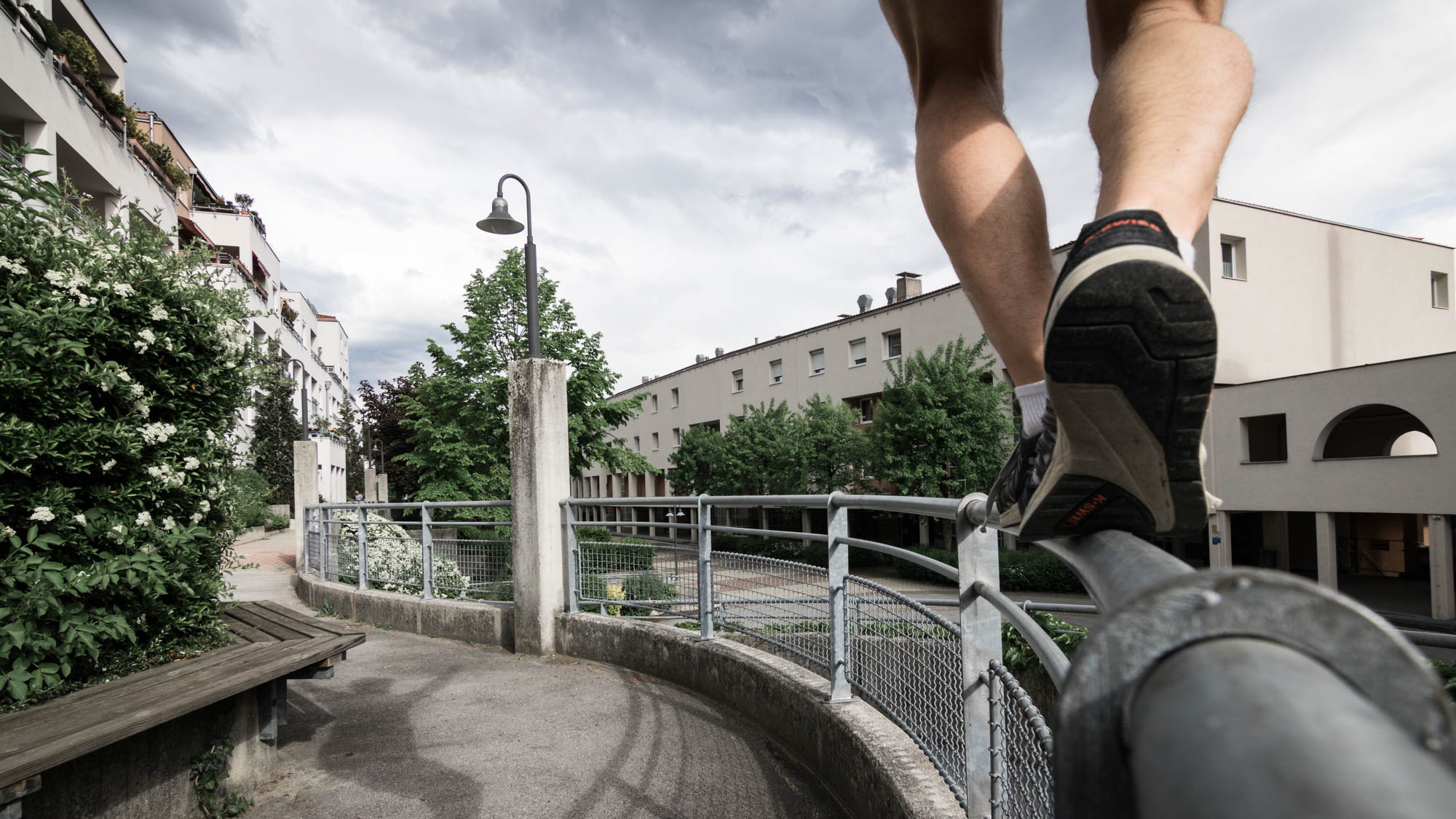
Measure. Train. Re-measure.
Two directions, one principle. Either we train broadly — a healthy, resilient body with a wide range of movement patterns — or specifically towards one goal, athletically. Both start with tests and end with the same tests, in black and white.
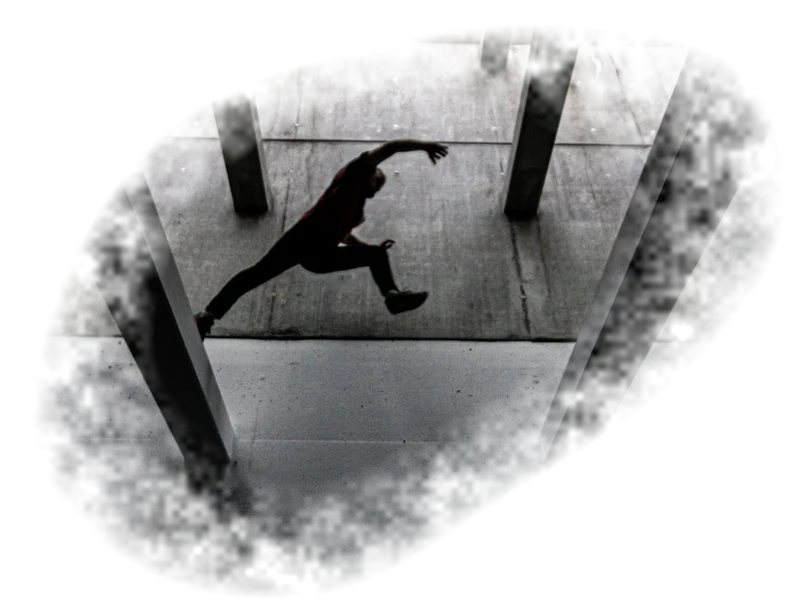
Strength, speed, mobility
Specific development towards a goal: faster, stronger, more mobile, more resilient in your sport. I coach you as an athlete and build the abilities your goal demands — jumping power, reaction, landing technique, strength in the end range. With tests at the start, a plan in clear stages, and numbers instead of feelings.
Athletic training →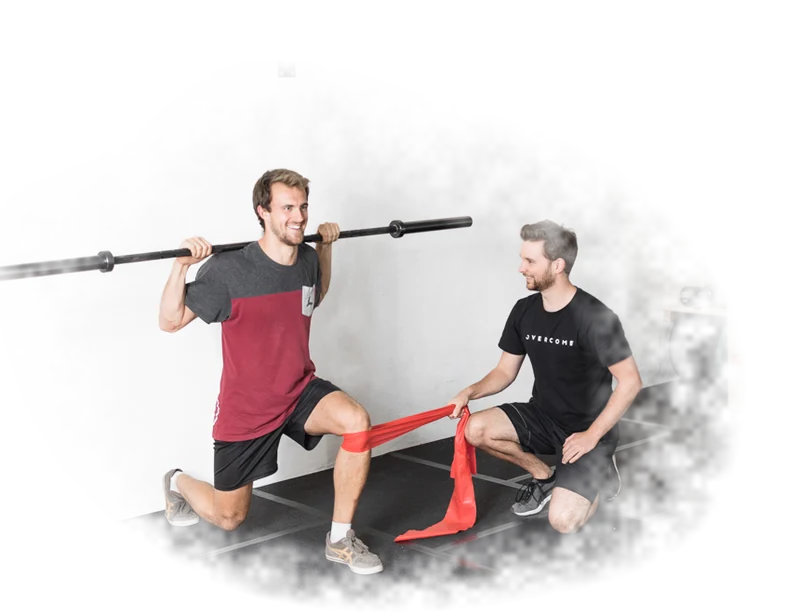
A body that keeps up
Broad development: enough strength, mobility and coordination for everyday life, many movement patterns instead of a few exercises. Finding weak spots, improving posture, rebuilding after completed therapy — with a plan you can also run on your own.
Personal training →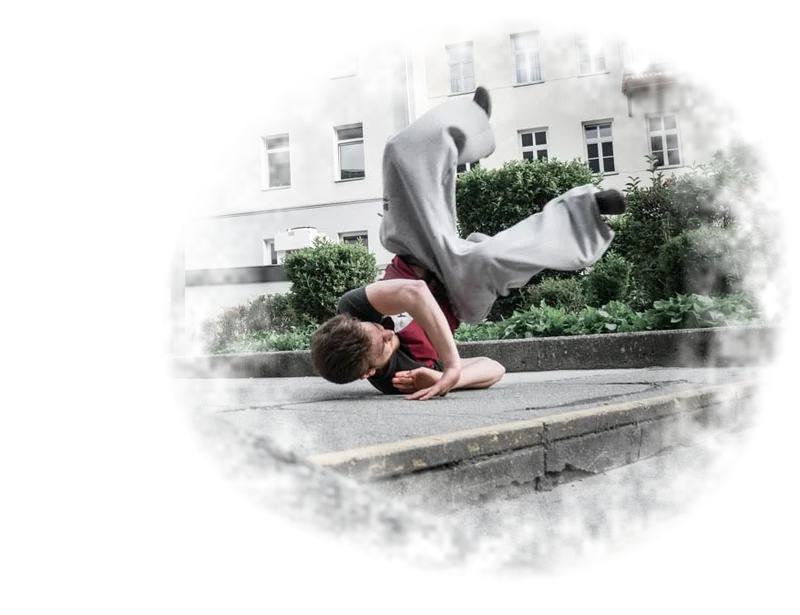
Stand steady, walk steady, fall well
Balance is a skill, not an age. Balancing on wobble cushions barely transfers to real standing, walking and falling — so we train what happens in daily life: reaction, steps, the ground. And when a fall does happen, technique decides: ukemi, the art of falling, from parkour and martial arts.
Balance & fall prevention →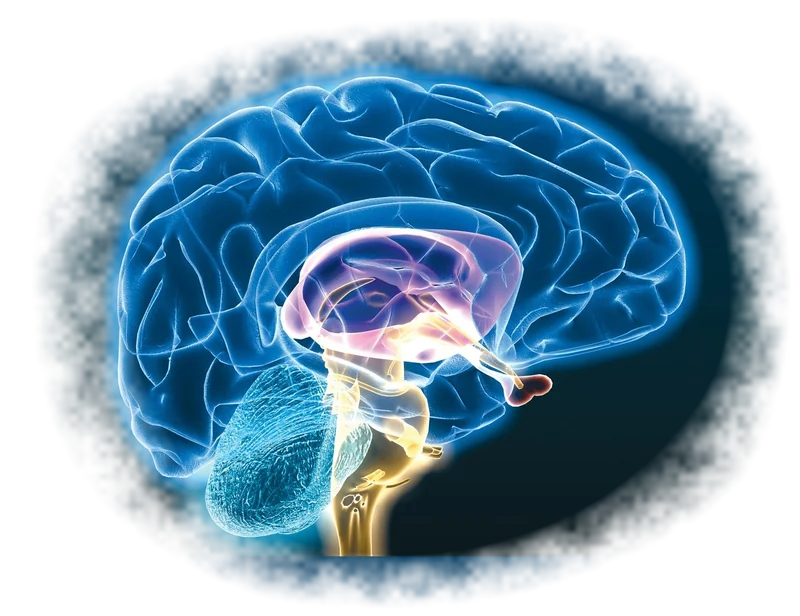
Eyes, balance, nervous system
Movement starts in the brain — so does pain. I work with the senses your brain uses for balance, reaction and pain, and with pain modulation: movement, breathing, sensory input. And I'm honest about what's proven and what isn't.
Neuroathletics →
Goals, habits, motivation
A plan you 'have to do' lasts three weeks. As a certified master mental trainer I work with goal setting, habits, motivation and discipline — and with fear, of falling or of the movement that once hurt. So the plan becomes a path you actually walk.
Mental training →No training without a goal. No goal without a measurement.
Five steps that repeat: after the re-measurement, we go back to the goal. Not every step is its own appointment — depending on the person, step 2 is done within the first consultation or needs its own hour.
First consultation
An initial talk: your history, diagnoses, limitations, wishes — you bring the diagnoses, I don't make any. Plus a movement check based on the FMS system and the balance check with Wobble. Not a verdict but the baseline: I see whether the fundamentals are in place and can show you what could be improved.
free · approx. 60 minA plan you'll actually follow
We define where we're going — and how you'll get there. This is where my background as a mental trainer comes in: habits, motivation, discipline. A training plan you 'have to do' lasts three weeks. So we build the target behaviour into your daily life in a way you can sustain long-term.
Baseline
Your goal becomes measurable: reps or 1RM for strength, joint angles for mobility, seconds for balance, a before photo for weight loss. This usually happens in the first training session, because that's where we have the time to go through every exercise.
Training
1:1 at your home, outdoors or in the training room. Between sessions you keep training on your own plan — the habit is part of the training.
€100 / session · 5-pack €470 · 10-pack €900Re-measure
The same tests as at the start. Progress isn't a feeling, it's a number — and the starting point for the next goal: back to step 2.
↺ back to step 2How often do we train?
That depends solely on your goal. If you mainly want a programme for yourself and a technique check-up now and then, one session every one to two months is enough. If you want real personal training — new content every time, someone guiding you through the session — one to two sessions a week make sense. Most people sit in between. We decide at the first consultation, and you can change it any time.
What I don't do
I'm broadly trained and know a lot — but I'm not a doctor, not a physiotherapist and not a psychotherapist. I don't make diagnoses, and I don't decide whether something needs a medical opinion either: that isn't my job, and I can miss things. You bring the diagnoses; I work with them, not on them. If I notice something during training that I can't place, I tell you openly and send you to a doctor first, even in the middle of a block.
Diagnoses, medication (such as blood thinners), osteoporosis, joint replacements and surgeries are discussed in the initial talk; they determine what we do and what we don't. With your consent I coordinate with your physiotherapist or doctor.
I don't just train muscles.
Every movement, every pain and every habit originates in the nervous system. That's why I work with the brain, not only with physiology — with three tools.
Better input, better movement
Eyes, vestibular system and body awareness deliver the data your brain builds every movement from. If one channel is imprecise, the brain hits the brakes: less strength, less mobility, a shakier stance. I test these systems one by one, find the weak spot and train it specifically (Z-Health). Often a movement changes in minutes, not months. More about neuroathletics →
Pain is made in the brain
A paper cut hurts out of all proportion, the knee you grazed you only notice in the shower. Same tissue, different verdict: pain is your brain's interpretation of danger signals, experience and expectation. Always real, never just a tissue finding. Movement variation, breathing and sensory drills can change that verdict. No diagnosis, no substitute for medical assessment.
Goals, habits, fear
As a certified master mental trainer and sports mental trainer I work with goal setting, focus, motivation and habits — and with fear: of falling, of the movement that once hurt. Training only works if it sticks. That's why every exercise gets a version that works on bad days too. More about mental training →
Innsbruck & Vienna
Innsbruck and Vienna are both home to me. I arrange sessions around you: early mornings, lunchtime, evenings or weekends, as a fixed weekly slot if you like. Send me your time window and you'll have the next free dates within a day. Rain or snow? We move to your home, your building's gym or your office — no session is cancelled. Travel included, same price in both cities.
Personal trainer Innsbruck
Private training room in Mutters, ten minutes from Innsbruck — no gym crowd. Or at your home, or outdoors: Rapoldipark, Baggersee, Inn promenade, the local mountains.
Innsbruck →Personal trainer Vienna
Training that comes to you: at your home, in your building's gym, at the office — or outdoors on the Donauinsel, in the Prater, Türkenschanzpark or Stadtpark. In English, too.
Vienna →Every goal has its number.
Measured at the start, repeated at the retest. Which number depends on the goal.
- BalanceSway in four conditionsWobble, the phone on your body
- StrengthWeight and repetitionsBarbell, squat, pull-up
- EnduranceHeart rate and paceHeart-rate watch, test run
- MobilityJoint angleGoniometer, photo before and after
- CoordinationReaction and hitsReaction test, ball drills
- SleepSleep duration and resting heart rateSmart ring, night after night
- BodyGirths and weightTape measure, scales, photo
- PainThe number and the movement that hurtsScale 0 to 10
- …And whatever else your goal needs. The list is not finished.
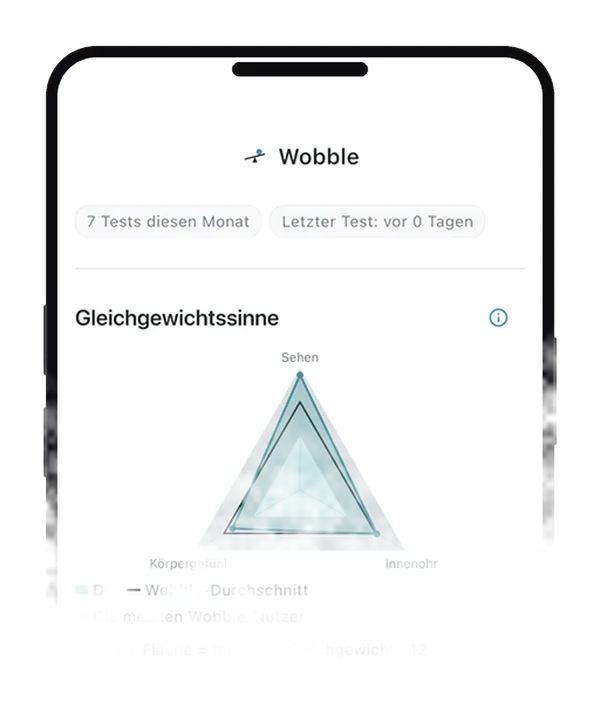
For balance the number is Wobble: an app I developed myself during my master's in medical informatics. Not a medical device, a benchmark for training.
Who is the training for? For example:
- Fall off the bike and get up with bruises instead of a fracture
- Climbing stairs without a hand on the rail, even on the old-building staircase
- Training after an ACL tear: trusting the knee again, first grass, then piste
- Ski conditioning at 65 so the whole season goes without sore muscles
- See clearly and stand steady again after the concussion in football
- The lower back complains daily although every scan is fine
- The neck pulls since you sit eight hours at the laptop
- Strength training from 60 in the living room, no gym, no mirrors
- Overcome the fear of falling when climbing and finally try the move
- Find the motivation for sport again after three dead January resolutions
- Learn to fall well at 72 so a slip does not become a fracture
- Judo, ice hockey, parkour: falling the way you planned it
- Run the first half marathon at 60 without wrecking knees and hips
- Train jumping power and land cleanly instead of rolling an ankle in the match
- Get rid of the dizziness when turning instead of avoiding crowded rooms
- Finally make the ankle stable that rolls on every root-strewn trail
- Building muscle from 50 so the water crates make it to the fourth floor
- Improve posture after eight hours of screen have rounded the back
- Lose the fear of falling and go shopping alone again
- Get competition nerves under control before Sunday's start
- Close your eyes in a one-leg stance at 35 and still stand
- Fall prevention at home so Mum can keep living on her own for a long time
- Train speed at 38 to keep up with the amateur team
- Tennis again at 55 after meniscus surgery, without listening to every step
- Neuroathletics for back pain when stretching and ointments do nothing
- Pain despite physiotherapy: not endure it, approach it differently
- Strength training for the first time at 34, without getting everything wrong on day one
- Improve mobility until tying shoes standing up works again
- Back on the bike after the injury although the head still hits the brakes
- After that one fall, trust yourself as much as before
And if yours is not here: write to me anyway.
Transparent. Same in both cities.
| Service | Price |
|---|---|
| First consultationInitial talk, movement check (FMS system + tests for your goal), balance check with Wobble, goal setting | free |
| Session60 minutes 1:1 — travel within Innsbruck and Vienna included | 100 € |
| 5-pack5 sessions, €94 per session — to get started, or for a programme with technique check-ups | 470 € |
| 10-pack10 sessions, €90 per session — for programmes over several months | 900 € |
Training as a pair? Possible, on request. Workshops for teams, clubs and companies: on request. Full details, block validity and cancellation rules on the prices page and in the terms.
About
I'm Florian, a coach since 2012. It all started with parkour — the sport that teaches balance, falling and reaction more rigorously than almost any other. The injuries of the early years taught me more about movement than any textbook: I wanted to understand why something hurts and how the nervous system controls movement.
Today I'm a Z-Health Fall Prevention Specialist, certified master mental trainer, state-certified trainer for athletics, fitness and coordination (AFK, Austrian Federal Sports Academy), FMS/FCS certified and chairman of the sports club AddON Movement in Innsbruck. On the side I'm a software engineer (flof.codes) studying medical informatics — which is where Wobble came from.
More about me & all certifications →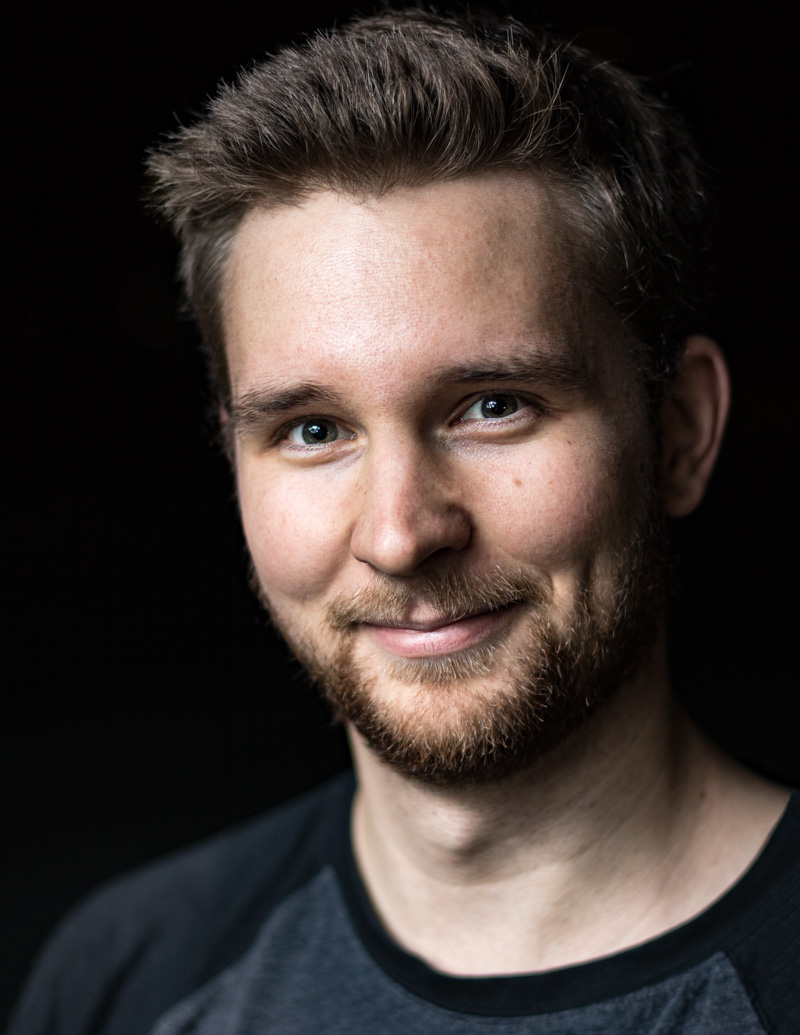
Write to me
A quick question or straight to the free first consultation — by e-mail, I reply within 1–3 working days. No newsletter, no sales call.
For doctors, physiotherapists and relatives: same address. With the client's consent I send the test and re-test report as a PDF. Information for professionals →